Scavenger hunt clues for kids, by room and reading level
Published 2026-10-16 · Updated 2026-10-16
A kids' scavenger hunt clue names one place, in words the child can follow. Hide that clue at the place before it. Use the Spoken line, the Word beside a picture, or the Rhyme. The Place column is the answer.
Clues by room
| Room | Place (the answer) | Level | Clue |
|---|---|---|---|
| Kitchen | Refrigerator | Spoken | Cold box. The milk lives in here. |
| Kitchen | Refrigerator | Word | COLD, beside a picture of a tall white door. |
| Kitchen | Refrigerator | Rhyme | I hum quietly and hold the cold food. Look on my door, then along the side. |
| Kitchen | Sink | Spoken | Water comes out here. Cups get clean. |
| Kitchen | Sink | Word | WASH, beside a picture of a faucet. |
| Kitchen | Sink | Rhyme | Twist the handle and water falls. Look on the counter beside the wall. |
| Bathroom | Towel | Spoken | Soft cloth. It dries your hands. |
| Bathroom | Towel | Word | DRY, beside a picture of a hanging cloth. |
| Bathroom | Towel | Rhyme | After the water, hands reach for me. I hang on a bar, soft as can be. |
| Bedroom | Pillow | Spoken | Soft square for your head at night. |
| Bedroom | Pillow | Word | BED, beside a picture of a pillow. |
| Bedroom | Pillow | Rhyme | Your head rests on this soft square. Lift it gently. The paper is there. |
| Living room | Couch | Spoken | Long soft seat. We sit together. |
| Living room | Couch | Word | SIT, beside a picture of cushions in a row. |
| Living room | Couch | Rhyme | Cushions in a line, a place to flop. Peek between them, then you stop. |
| Entry | Front door | Spoken | The way outside. Guests knock here. |
| Entry | Front door | Word | OUT, beside a picture of a door. |
| Entry | Front door | Rhyme | Guests knock on this tall piece of wood. Check the knob, then the mat by the shoes. |
| Yard | Tree | Spoken | Outside. A trunk with leaves. |
| Yard | Tree | Word | TREE, beside a picture of a trunk. |
| Yard | Tree | Rhyme | Bark and branches, shade on the ground. The paper is low, where the roots are found. |
Leave the tree rows out if you have no yard. For a nature list and a neighborhood route, see outdoor scavenger hunt for kids.
Turn one clue into the other two levels
Start with a place the child can reach. For Spoken, say what happens there, in a few words, and you read it aloud. For Word, pick one word the child might know, such as a color or COLD, and draw the place beside it. For Rhyme, write two short lines that end on a similar sound, and still draw the place.
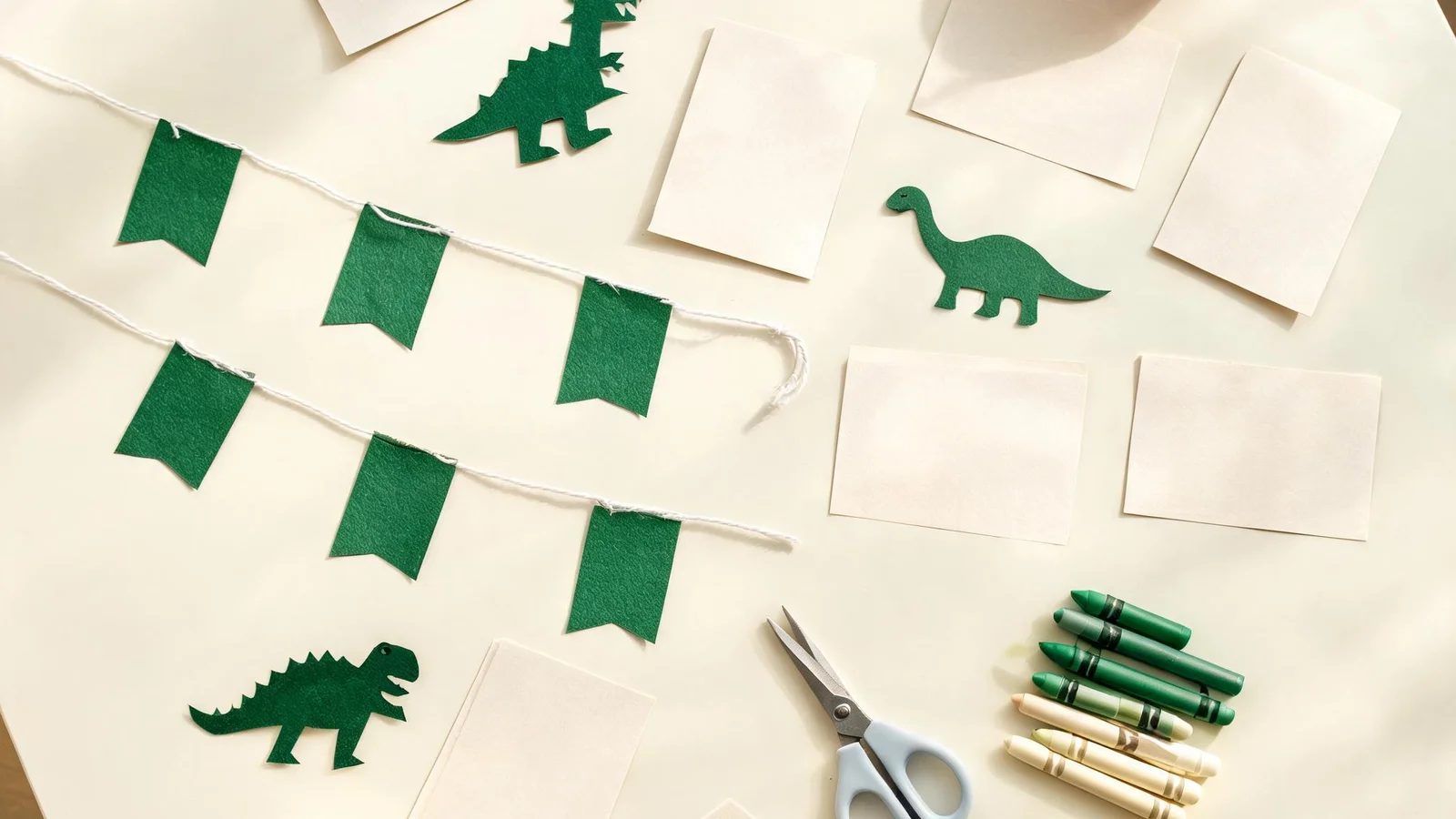
The picture is what moves a child who is using the spoken line. A white door stands for the refrigerator. A faucet stands for the sink. A soft square stands for the pillow. You can draw it with a crayon on the card.
Why these three levels
By 4 years, most children (75% or more) can say sentences with four or more words, can say some words from a song, story, or nursery rhyme, and can tell what comes next in a well-known story, on the CDC milestones by 4 years. The same 4-year page says to use words such as first, second, and finally, and to ask what comes next, which is the shape of a clue chain.
A Spoken clue matches that stage: one short line you read, plus a picture. A Word clue is one familiar word beside the picture, for a child who is starting to notice letters.
On the CDC milestones by 5 years, most children name some letters when you point to them and write some letters in their name. That page also says to encourage a child to read by looking at the pictures and telling the story, and to play rhyming games such as asking what rhymes with cat (CDC milestones by 5 years).
Paying attention for 5 to 10 minutes during activities, such as story time or crafts, is on that same 5-year milestone list. By 5 years, most children follow rules or take turns when playing games with other children (CDC milestones by 5 years). A pair can share one card.
The Savvy Sparrow list gives 60 rhyming clues and suggests a time limit of 30 to 45 minutes, and that page does not sort clues by reading level or show a chain that still works if you drop a place. The same page says that for younger kids, fewer, simpler clues are a good idea (Savvy Sparrow list).
For a child at the 5-year milestone, plan a few stops and walk along. Save the longer window for a child who is already reading the rhymes with a buddy.
Chain the clues so a missing place does not stop the hunt
- List only places you have. Leave the rest out before you write.
- Put the prize at the last place. A snack or a handwritten note works.
- Write the clue that names the last place, and hide that clue at the place before it.
- Keep going backward until the first clue, which you hand to the child.
- Write the answer on the back of the card, or on a sheet you keep in a pocket, so you can help and leave the next card hidden.
- If you later drop a place, rewrite only the clue that named it. The other cards stay.
These lines name ordinary rooms in a house. A home with no couch, no yard, or no towel bar needs a rewritten line for a place you do have. Walk this clue path once before the birthday child starts, and move any card that names a missing place.
One path you can copy (illustrative)
Hand the child a spoken clue that names the front door. At the front door, hide the clue that names the couch. At the couch, hide the clue that names the refrigerator. At the refrigerator, hide the clue that names the pillow. The prize waits with the pillow.
If the home has no couch, the door clue names the refrigerator instead. The refrigerator clue still names the pillow. One rewrite, and the path still ends at the prize.
Cards that already follow this chain
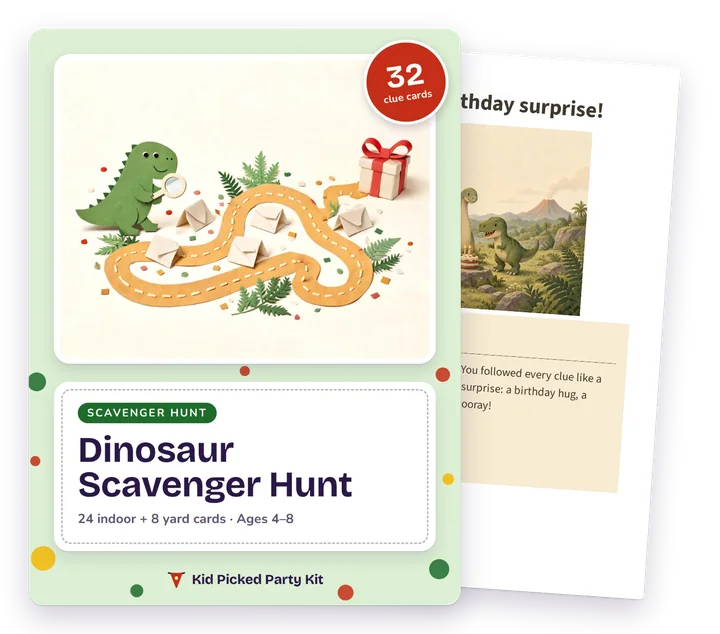
The Dinosaur Birthday Scavenger Hunt runs a dinosaur treasure hunt at home or in the yard that ends at a surprise, for a birthday child or a party group. It includes 24 indoor and 8 yard riddle cards with picture hints and parent stubs, start and finish letters, a hiding-order sheet and blank cards, and a Party Maker file: pick your places, edit any riddle, add the child's name. It lets you untick places you do not have, edit riddles and add the child's name in the Party Maker, or use the PDFs and the hiding-order sheet by pen. It includes team mode for two teams. It requires a printer, paper, scissors and a small prize, and a web browser to pick places. It comes on US Letter and A4 paper as separate PDFs. It is print-only. It is written for ages 4–8; non-readers need a reading buddy.
For teams, a party timetable, and where to put the prize, see scavenger hunt for a birthday party.
Questions
What is in a scavenger hunt?
A start clue, a short chain of clues that each name the next place, and a prize at the last place. For a young child, each card also needs a picture of that place and the answer where the host can see it.
What are some good clues for a scavenger hunt?
A good clue names one place the child can reach, in words they can follow. Use a spoken line, one familiar word plus a picture, or a two-line rhyme. The table on this page is a set you can copy and hide.
How do I create a simple scavenger hunt?
List places you have, pick one level of clue, and build the chain backward from the prize. Hand the child only the first clue. Walk it once so a card in the wrong spot does not stall the game.
What are some easy clues for a treasure hunt?
Use the Spoken rows. Say the short line, show a picture of the place, and let the child go. A reading buddy can add the rhyme if the child wants a harder card.
How do I write good clues for a scavenger hunt?
Name the place, not the whole path. One place per card. Put the answer on the back. If you drop a place, rewrite only the card that named it.
Can you give me treasure hunt clues for kids that include the answers?
Yes. In the table, the Place column is the answer. Hide the clue at the previous place, not at the place the clue names.