Birthday party ideas for a 6-year-old at home
Published 2026-10-16 · Updated 2026-10-16
Birthday party ideas for 6 year olds at home work when the visit stays near 90 minutes including food, the games use teams, and each station is short. Here is the full list, then the order to run it.
Ideas you can run at home
- Soft-ball relay in two lines, with a handoff at a turn-around chair
- Spoon relay with a cotton ball
- Freeze dance to one song
- Limbo under a broom or a string
- Short scavenger hunt: a picture and one word on each card
- Would-you-rather questions an adult reads aloud
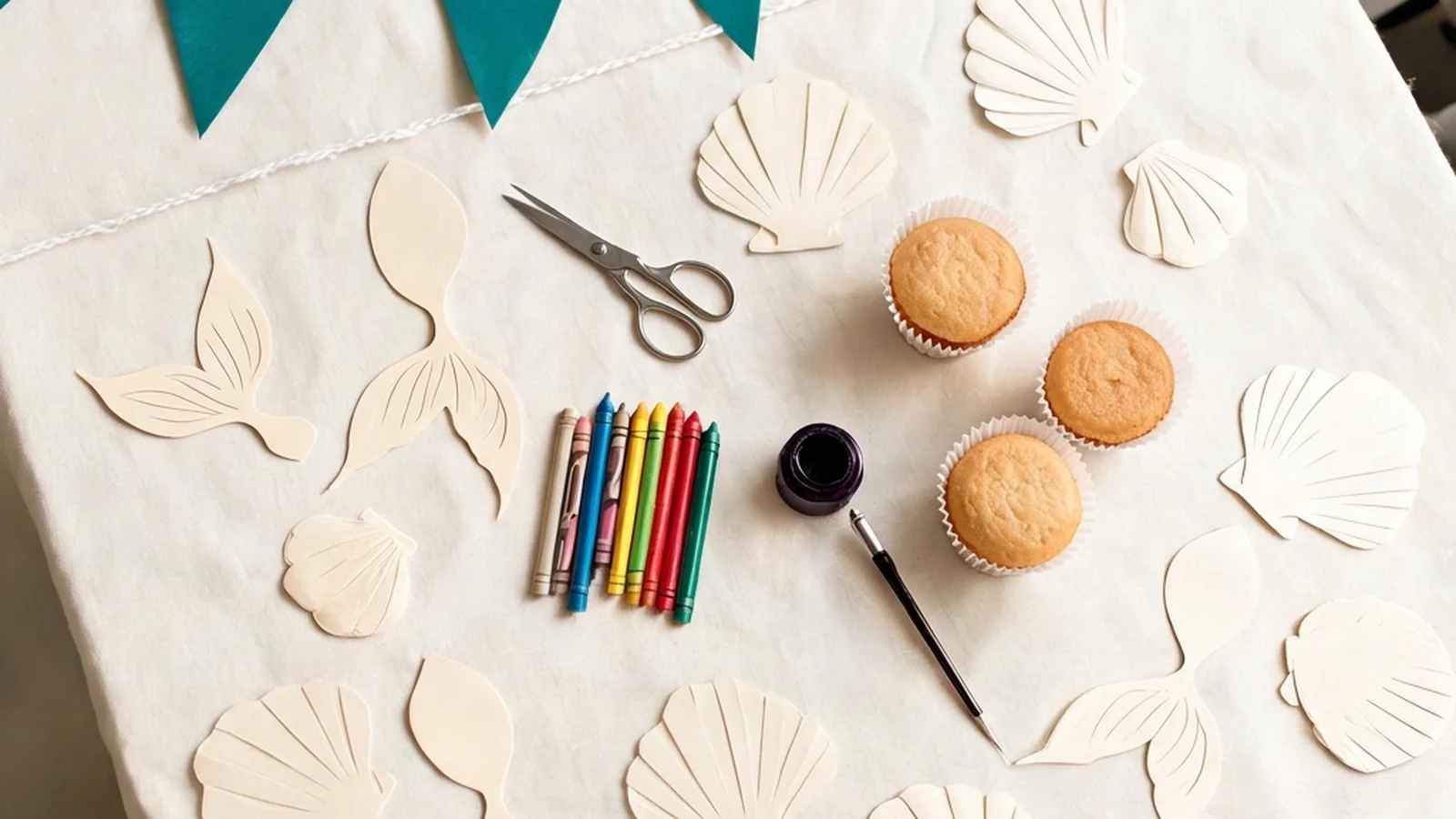
- Cookie decorating or cupcake decorating
- Mini pizzas on English muffins
- A long crayon mural, or chalk on the driveway
- Pin-the-fin on a mermaid drawn on paper
- Picture bingo or memory match at the table
- Sink-or-float in a bowl, with a spoon, a cork, and a small toy
- Blanket picnic in the yard
- Paper photo props on sticks
- Pancakes and pajamas, if you host in the morning
- A thank-you note table after guests leave
Drop any row your home cannot hold. A yard picnic needs a yard. A driveway chalk mural needs pavement. The relay, the hunt, and one food station are enough for the afternoon.
How long to host, and who to invite
A 6-year-old birthday party should be kept to about 90 minutes long, including time for food, and a mid-afternoon party with light snacks such as pretzels and crackers plus a themed cake is the shape Mom of 6 gives for this age. Now that a child is in school, that page also offers a smaller invite: children in the class of the same gender, a group about half the size of the whole class (Mom of 6). A handful of close friends is the same idea when half a class is still a crowd.
Opening presents after guests have gone home leaves a later quiet time for a thank-you note, which is the order that page uses (Mom of 6). A photo of the group, printed and set in a simple paper frame, is one favor that page likes. Take the photo early and ask a helper to print it while the games run.
A relay, then a short hunt
Split the guests into two lines. Each child carries a soft ball to a chair and back, then hands it to the next child. If the ball drops, the same child picks it up. On the second round, the other line starts. A spoon and a cotton ball is the indoor version when a ball would hit a lamp.
By middle childhood, ages 6 to 8, children can dress themselves, catch a ball more easily using only their hands, and tie their shoes, and they pay more attention to friendships and teamwork, on the CDC positive parenting tips for ages 6 to 8. That sheet also says a parent can help a child learn patience by letting others go first (CDC tips for ages 6 to 8). The second-round start is that rule, played out.
A wider set of birthday party games, sorted by age and space, is in kids birthday party games.
For the hunt, pick a short chain of places the child can reach: the refrigerator, the couch, the front door, and a tree if you have a yard. Each card shows a picture of the next place and one word a new reader might know, such as COLD, SIT, or OUT. Hide the card at the place before it. The prize, a snack or a handwritten note, waits at the last place. An adult or a reading buddy says the line if the child wants it read.
At 5 years, most children (75% or more) follow rules or take turns when playing games with other children, name some letters when you point to them, and pay attention for 5 to 10 minutes during activities such as story time or crafts, on the CDC milestones by 5 years. Keep each station inside a short stretch, then switch. The 6-to-8 sheet adds the next step: as a child learns to read, take turns reading to each other (CDC tips for ages 6 to 8). A buddy and a picture cover a child who is still on the 5-year side of that step. A child who already reads can take the rhyme.
Room-by-room clue lines, spoken, one word, or a rhyme, are in scavenger hunt clues.
Food, favors, and the table
Light snacks and cake match a mid-afternoon party. Cookie decorating, or mini pizzas on English muffins with toppings in small bowls, doubles as the sitting-down station between the relay and the song. Ask families which foods to set aside when you invite them, and put a small card by each bowl so guests can see what is in it.
Wash hands with plain soap and water for at least 20 seconds before anyone handles shared food, which is the hand-washing step on FoodSafety.gov. Refrigerate perishable foods within 2 hours, the chill step on that same FoodSafety.gov page.
A paper frame with the group photo, or the crayon mural cut into strips, is enough to send home. Other themes, sorted by age, are in birthday party theme ideas.
Why teams fit this age
Middle childhood, ages 6 to 8, is when friendships become more important and children show more independence from parents and family, and they learn better ways to describe experiences and talk about thoughts and feelings, on the CDC tips for ages 6 to 8. A would-you-rather circle uses that talking. A two-line relay uses the teamwork. A job such as handing out napkins uses the independence the same sheet names, including help with a household task such as setting the table (CDC tips for ages 6 to 8).
The one limit of this plan is the child and the room in front of you. The 5-year attention span is a milestone from the year before, so a 6-year-old who already reads can take a longer clue, and a child who tires in a crowd needs fewer stations.
One home afternoon (illustrative)
These names and times are an example, not a rule.
Sam's party starts at 2:00 with six friends in the living room. Freeze dance runs while late arrivals hang coats. At 2:15 the two lines do the soft-ball relay, and the second line starts the second round. At 2:30 Sam and a buddy follow four picture cards from the door to the couch to the refrigerator to a pillow, where the cookies wait. Decorating runs until 3:00. Cake and the song end by 3:20. Guests leave at 3:30. Presents open after the door shuts.
If the home has no couch, the door card names the refrigerator. One rewrite, and the cookies are still at the end.
Mermaid paper you can print
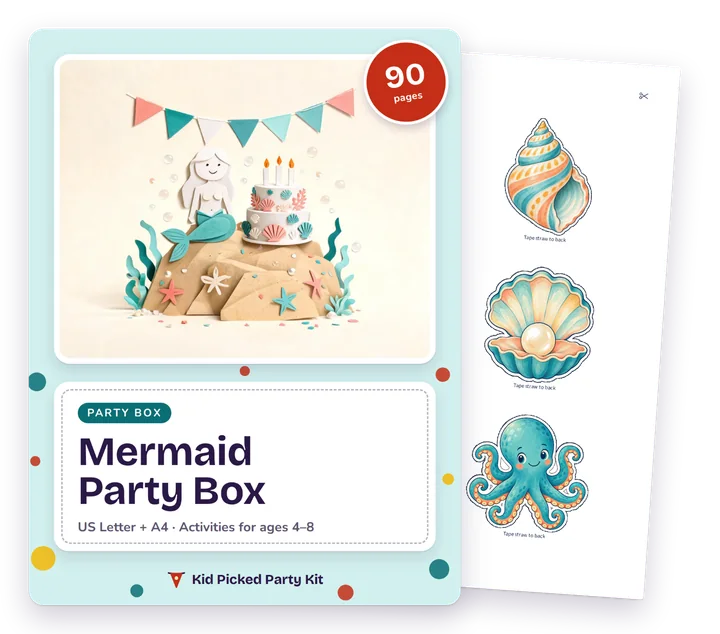
The relay above is a game you set up with household things. For printed picture games and a hunt, the Mermaid Birthday Party Box is everything paper for a mermaid birthday party at home: invite the guests, decorate the table and run the games and a scavenger hunt in one theme. It includes an invitation at 7 × 5 in, two per sheet, plus a phone-size invitation image from the Party Maker. It includes cupcake toppers, favor tags, food tent labels, thank-you cards, photo props, a welcome sign, and Happy Birthday banner flags with age numbers and blank flags. It includes the 10 activities in this mermaid set: picture bingo, memory match, an I-spy count, a maze, a word search, a pin game, act-it-out cards, would-you-rather cards, roll-and-draw, and guess-how-many. It holds a mermaid scavenger hunt: 24 indoor clue cards, 8 yard clue cards, start and finish letters, and a hiding-order sheet. It includes a host guide with answer keys, a start-here guide, a how-to-print note, and a Party Maker file where you type the child's name, age and party details once. It lets you type the child's name, age and party details once in the included Party Maker, then print, or fill the blank PDFs by pen. It requires a printer, paper or cardstock, scissors, tape, string, and a web browser when you personalize the mermaid pieces. It includes separate PDFs for US Letter and for A4. It is print-only. It is written for ages 4–8, with adult help for cutting and reading the mermaid cards.
Questions
What are some fun and interesting birthday party ideas for a 6-year-old boy?
A soft-ball relay, a short picture-and-word hunt, cookie decorating, and mini pizzas on English muffins. The list on this page is the same for a boy or any child this age. Pick the ones your room can hold.
What time should a 6 year old birthday party start?
Mid-afternoon, so light snacks and cake fit inside about 90 minutes including food, which is the length Mom of 6 gives for a 6-year-old party at home.
How to make a 6th birthday special?
Give the child a job friends can see, such as starting the second relay round or reading the first clue with a buddy. Open presents after guests leave so thank-you notes have a quiet moment.
What can kids do at a birthday party?
A relay, a short hunt, a decorating station, and a shared snack. Teams fit this age because friendships and teamwork get more attention now, on the CDC tips for ages 6 to 8.
How to plan a cheap birthday party?
Stay home, print the paper pieces, and serve snacks you already know how to make. The ideas on this page use a soft ball, crayons, string, and food.